
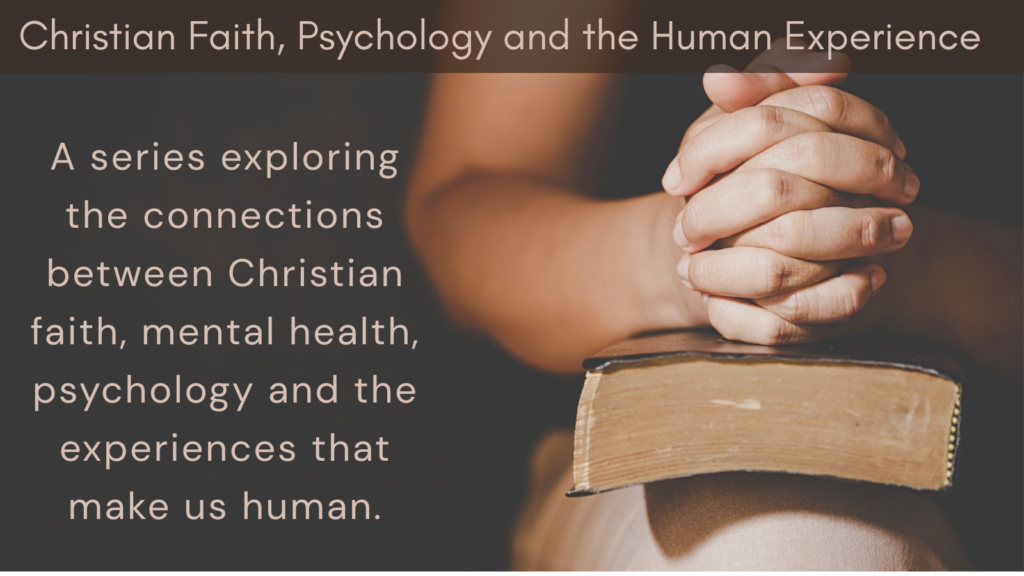
Hi and welcome to the first post in this series exploring Christian faith, psychology and human experience.
In this series, I hope to introduce Biblical topics and explore how they link with psychology and our mental health in a practical and supportive way, in a way that can be read and appreciated by believers in Christ, unbelievers, and those from other belief systems.
I’ve always been aware of the spiritual aspects to my life – and my clients’ lives, which I only bring up when they do, or do it in a way that isn’t bringing my own agenda into the therapy room. It has to be the client’s choice.
This brings another dimension of understanding, but also makes sense to me in a psychological sense.
I won’t go too deeply into analogies, but just to give you a taste of what I mean — this is how it makes sense in my own mind, rather than necessarily how Freud positioned it or how the Bible itself would frame it.
Freud’s concepts of the conscious, preconscious and unconscious mind have often made me reflect on the Biblical understanding of humanity as a whole person: body, soul and spirit. While these concepts come from very different frameworks and are not interchangeable, they both invite us to consider that there are deeper layers to human experience beyond what we immediately see or consciously understand.
This series will not preach at anyone – though some might feel preached at, and that’s not my intent – but to inform, to grow in hope, grace and understanding for ourselves as we navigate the world we live in, which is becoming more complex.
As a counsellor and supervisor, I recognise the importance of respecting each person’s beliefs, values and worldview. This series is not about bringing Christianity into therapy, but about exploring the relationship between faith, psychology and the human experience.
I do believe the spiritual side of our world is coming to the forefront a lot more over the past 6-10 years, maybe more, and being aware is the first step to know how to tackle what’s coming at us, or what is already around us.
A disclaimer on this series: there are topics in the Bible that are very firm in what they mean, and there’s no way to go around them or explain them differently.
For those who believe the Bible to be the Word of God, there is an understanding that Scripture is not something we can simply select parts from according to changing cultural preferences. Instead, it invites us into a process of humility, reflection and transformation — even when passages challenge us.
From personal experience, and from seeing this happen with people close to me, there is no need to force ourselves into conviction about something that we might be challenged with in the Bible (or elsewhere for that matter). It is the Holy Spirit who convicts us, renews our minds, and helps us see things clearly and truthfully.
This is why I say I’m not preaching, because I can’t convince or convict anyone of anything. That’s not my job. I’m simply a humble messenger who likes to write, challenge ideas and present the Truth of Christ the best I can.
Similarly to how I work in the counselling and supervision room, it is up to my client or supervisee to take what I observe in sessions, make it their own, and decide what genuinely works for them.
Some of these topics I’ll talk about directly, others I might just mention on the surface or perhaps not name and speak more generally about those socially accepted norms that don’t align with Biblical perspectives.
If you’ve read my other posts, you can see I am honest, but compassionate. I hope you can see that through these posts, even with the difficult topics that I might go around in circles with, before even posting the final draft.
I am hoping that I can make a variety of posts related to
- Biblical People that made an impact in my life and are good examples of very human experiences of suffering, overcoming and of God’s love and grace for us
- Working through things like grief, anger, depression like David in some of his Psalms
- Overcoming physical pain that leads to emotional and psychological distress
- Sound and wholesome advice from the book of Proverbs and the Epistles (and more)
- And so on…
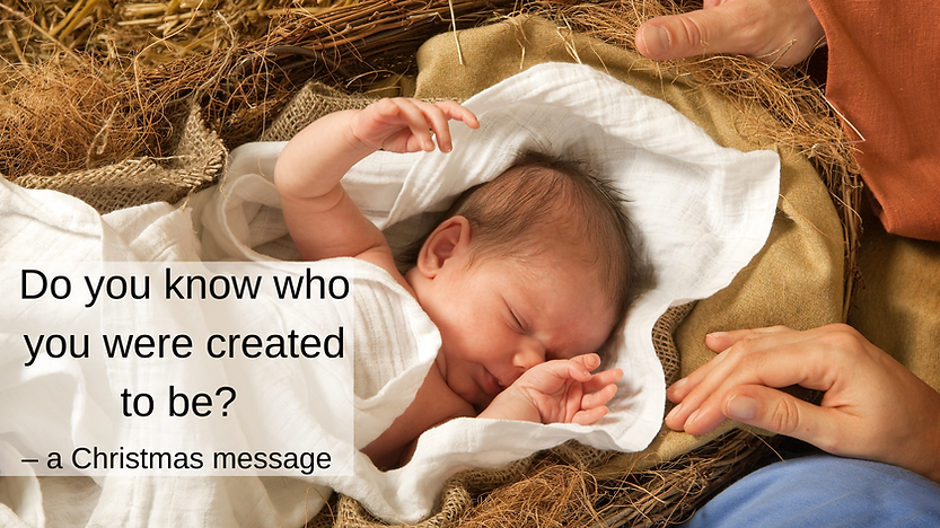
While I publish more posts in this series, I’ll leave you with a post on Identity I wrote for Brainz Magazine a few years ago.
Do feel free to browse through my Mental Health and Wellbeing, Self-Care, and other blog categories and do message me if you’re curious about particular topics.